Pope Francis in Peru: "The native Amazonian peoples have never been so threatened in their territory as they are now".
 hace 8 year
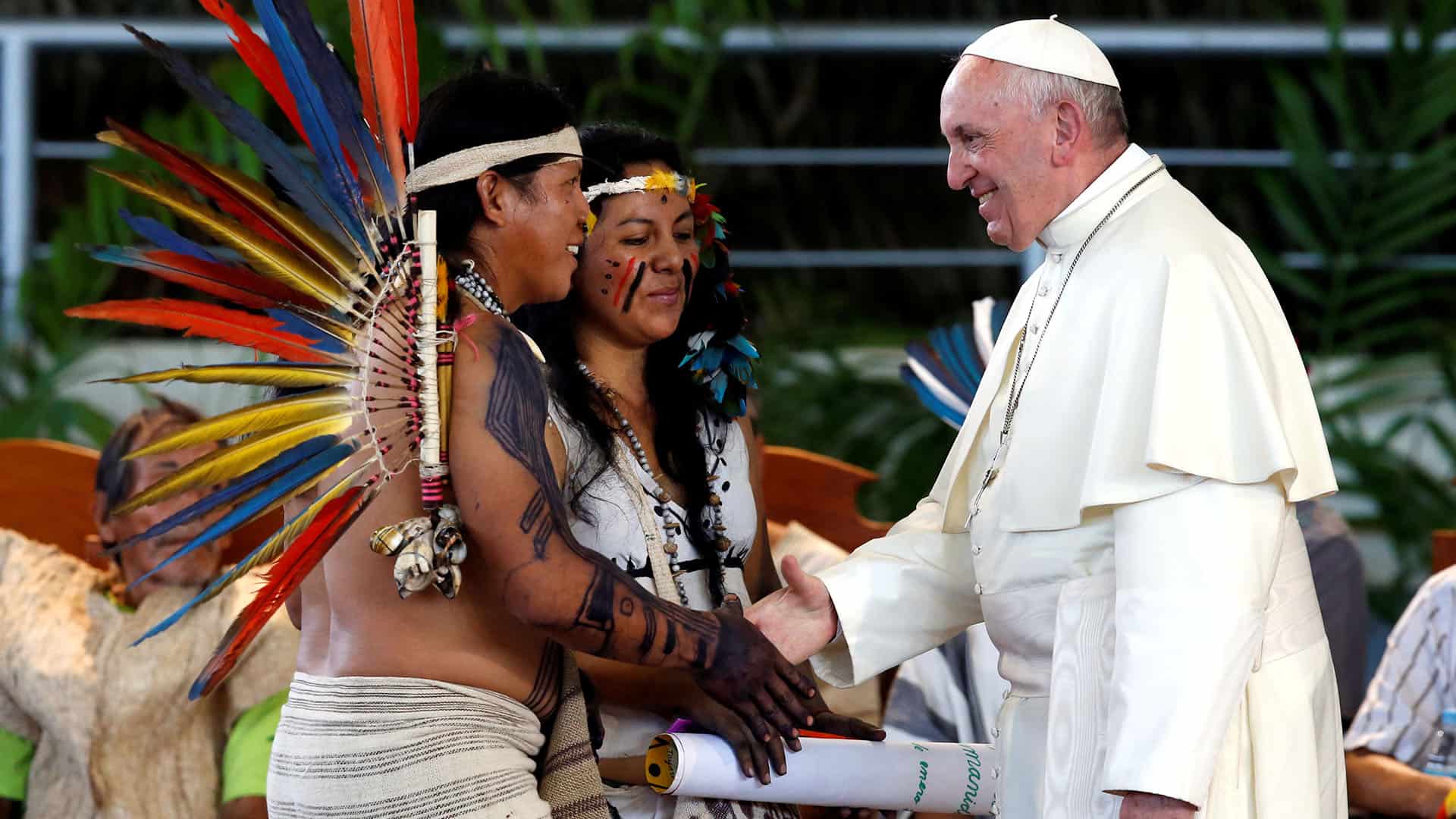
“The indigenous peoples of the Amazon want to tell all of humanity that we are also concerned because the land is deteriorating, animals are dying, fresh water is running out due to the consequences of climate change.”,Miguel Tayori, leader of the Amazonian Harakbut ethnic group, said during Pope Francis' visit to the Peruvian region of Madre de Dios last week.
The Supreme Pontiff, who has repeatedly voiced his support for the fight to address climate change -and has also supported on countless occasions the implementation of the Paris Agreement - chose to visit Madre de Dios, as his first destination in Peru, because this region has been home to an ethnic and cultural diversity for some 3,000 years, and is inhabited by native peoples belonging to 7 linguistic groups, according to the Federation of the Madre de Dios River and its tributaries (Fenamad). In addition, this area of the Amazon is considered one of the most biodiverse places on the planet.
On the other hand, Madre de Dios has been hit hard by illegal mining, and according to the Peruvian Society of Environmental Law, In 17 years, 173,000 hectares of forest have been destroyed. At the same time, ecosystems have been polluted and social problems have been generated, such as an increase in human trafficking. Illegal mining and indiscriminate logging generate various problems in indigenous communities, but at the same time populations in voluntary isolation are threatened.
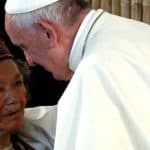
Under this evidence, Pope Francis held a special meeting with indigenous people from Peru, Brazil and Bolivia, who made known the problems they face, among which are the degradation of forests, the loss of their lands, the violation of their rights, among others. The response of the Supreme Pontiff focused on a speech of protection of life and the Amazon.
“The defense of the land has no other purpose than the defense of life. We know of the suffering that some of you suffer from oil spills that seriously threaten the lives of your families and contaminate your natural environment. The native Amazonian peoples have probably never been so threatened in their territory as they are now”.”, said Francisco.
Regarding the indigenous peoples in isolation, he said: “We know that they are the most vulnerable of the vulnerable. The backwardness of past times forced them to isolate themselves to their own ethnic groups, they undertook a history of captivity in the most inaccessible places of the forest in order to live in freedom. Keep defending these most vulnerable brothers and sisters”.
Laudato Sí and vulnerable populations
Pope Francis“ attention to indigenous peoples and care for the planet is not new. Already in 2015 - the year in which also 195 countries adopted the Paris Agreement on climate change, the supreme pontiff published his first encyclical letter, entitled "Laudato Sí” or “Care for the Common Home".
The document states, among other points, that “.“the loss of forests implies the loss of resources for food, medicine and services.”and denounces the fact that multinationals leave environmental liabilities, peoples without life and contamination. In a clear reference to the indigenous groups, he explains that “the aboriginal communities are not simply minorities but the main interlocutors, especially in projects that affect their spaces, because they are the ones who take the best care of them.”Sociologist Roberto Espinosa has explained on the platform Servindi.
Therefore, it was not surprising that, during his visit to Madre de Dios, the Pope indicated that “It is necessary to break with the paradigm that considers the Amazon as an inexhaustible pantry of the states, without taking into account its inhabitants”.
It is important to remember that the indigenous peoples of the Amazon play a fundamental role in the conservation of forests, which is necessary to slow the increase of GHGs, but also allows the preservation of indigenous cultures.
Alonso Córdova, director of World Wildlife Fund (WWF) in Madre de Dios explained to ConexiónCOP that the indigenous peoples fully agree with the encyclical Laudato Sí.
"Forests in indigenous territories are conserved thanks to their traditional livelihoods, but many lands are still unprotected due to lack of titling and recognition. On the other hand, indigenous peoples and local communities have an extremely important role to play in the face of climate change. They are stewards of the world's remaining forests, but they are also particularly vulnerable because they are displaced by deforestation and large infrastructure, mining and hydrocarbon projects.", he said.
Francisco and the “Madre de Dios Pact for Environmental Justice in Peru”.”
On the penultimate day of his visit to Peru, the Pope met with representatives of the Judiciary, who handed him a document entitled: “.“Madre de Dios Pact for Environmental Justice in Peru”In this document, various organizations assume the urgent need to protect the human rights to life, health, integrity, and the right to enjoy a healthy and balanced environment.
Through the pact, government and civil society organizations are committed to revaluing and safeguarding the important services that ecosystems provide for the development of people, especially vulnerable populations and indigenous peoples.
Mariano Castro, member of the Advisory Council of the Peruvian Judiciary and professor at the Catholic University, explained to ConexiónCOP that the pact has 10 concrete commitments to improve access to environmental justice, not only in the Madre de Dios region, but focused on defending people's rights.
"Justice is a mechanism to prevent violations. Based on the Pope's messages on the need to care for our common home, the pact is a set of commitments that requires the participation of all sectors to improve the process of environmental justice in Peru.”explained Castro.
Mariano Castro, who was Vice Minister of the Environment, explained that in his meeting with the indigenous groups, the Pope proposed to change the trend of degradation. In addition, as a result of the dialogue agenda for amazon development. “The Pope pointed out the need to put an end to the silences that kill, because environmental degradations and social exclusion particularly affect indigenous peoples and their health,” Castro concluded.
DATA
- According to the National Institute of Statistics and Informatics in Peru (INEI), The population of the Amazonian Native Communities increased from 227,960 inhabitants counted in 1993 to 332,975 inhabitants in the 2007 Census.
- The Extraordinary Synod to address the problems of the Amazon and especially of the indigenous population will be held in October 2019.
- Pope Francis also visited the “Trujillo” region, an area that was hit in 2017 by the El Niño Costero phenomenon .
← Previous
Next →

About ConexiónCOP
Since 2014, ConexiónCOP has been developing actions to consolidate the role of the Latin American media as actors in... Read more