"We don't need to generate more, we need to distribute better."
 hace 10 year
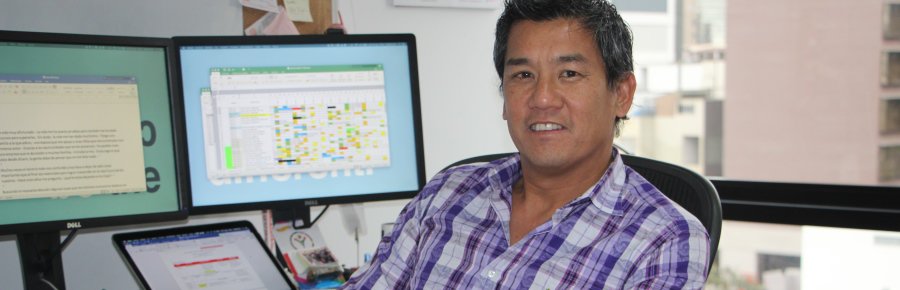
Juan Alberto “Chacho” Wu is a Peruvian businessman trained in administration (Universidad de Lima). Leaders+1 - a platform of entrepreneurs that seeks to transform the future of Peru by incorporating a systemic vision of sustainable development - and defines himself as a person willing to learn, share his knowledge, and live in constant gratitude.
As a partner of the restaurant “Panchita”, In 2015, Chacho developed, together with a group of young people, the program “Sinba” - that takes advantage of organic resources and gives them an added value. They reuse organic waste, and through a process convert it into compost or animal feed.
“In gastronomy there is a worldwide boom, the first revolution was given by chefs with flavors, the second revolution we entrepreneurs have to give it by protecting the planet.”, Wu explains.
Regenerate for a better life
Chacho is also general manager of Pikango, a company dedicated to point-to-point vehicle transportation. With the intention of generating savings and giving it a differential value, Pikango uses biodiesel from the leftover oil from the Panchita restaurant as fuel for its fleet.
“We are based on the concept of the collaborative economy whereby we look to see how we can help with what we have on hand. The oil comes from the restaurants, it is processed and we use it in the cargo trucks. What does a restaurant have to do with a cargo transportation company, well, not much, but that is the beauty of the collaborative economy. The restaurant solves a waste problem, one company processes it, generating jobs, and another buys the product, which in turn generates lower emissions.”, he explains.
Chacho further indicates that the investment to implement a sourcing system does not exceed USD$5,000, and the process of change is immediate. «There is not much to think about since we all win, it is necessary to have the will to change, which is the most important thing.. We cannot yet measure the profitability but we know that the cost of using biodiesel is the same as using diesel, the benefits it generates for the environment and society are the real benefit.», he adds.
Currently in Peru only 30% of the transportation business is formalized and therefore the people in the industry work informally.
“Our purpose is to re-humanize freight transportation. It is clear to us that there is a big change to be made in the sector and it must start by changing the mentality of the businessman and the employee. We need to change the way we see the business, a real change in the system”.”he says.
Since 2014, Chacho changed his perspective on business growth. In the context of COP20, María Paz Cigarán, general manager of the Libélula consulting firm, invited Chacho to join Líderes+1 and he recalls: “María Paz taught me to see a background far beyond my own, and I began to carry out projects like Sinba that allow me to have a balance with business, people and nature”.
The businessman believes that there is no need to generate more, because the world generates enough. For him, we must seek to distribute better so that all people have the opportunity to grow and have an impact on the future of the planet, and therefore on the future of children and young people.
“Two years ago I crossed paths with people who have allowed me to make changes in my life. Now I would like people to also learn from what I can teach, I don't want to be exclusive, because I believe that if you share, you grow.”, he concludes.
Juan Alberto “Chacho” Wu:
He leads the Board of Directors of Special Olympics Peru, an institution dedicated to the integration into society of people with intellectual disabilities through sports programs with health support as well as family issues.
Chacho will participate as an exhibitor at nexos+1 on October 24 and 25, and will talk about his experience and transformation, as an example of stories that transform the world.
← Previous
Next →