


Eco MT Group - When recycling wants to grow
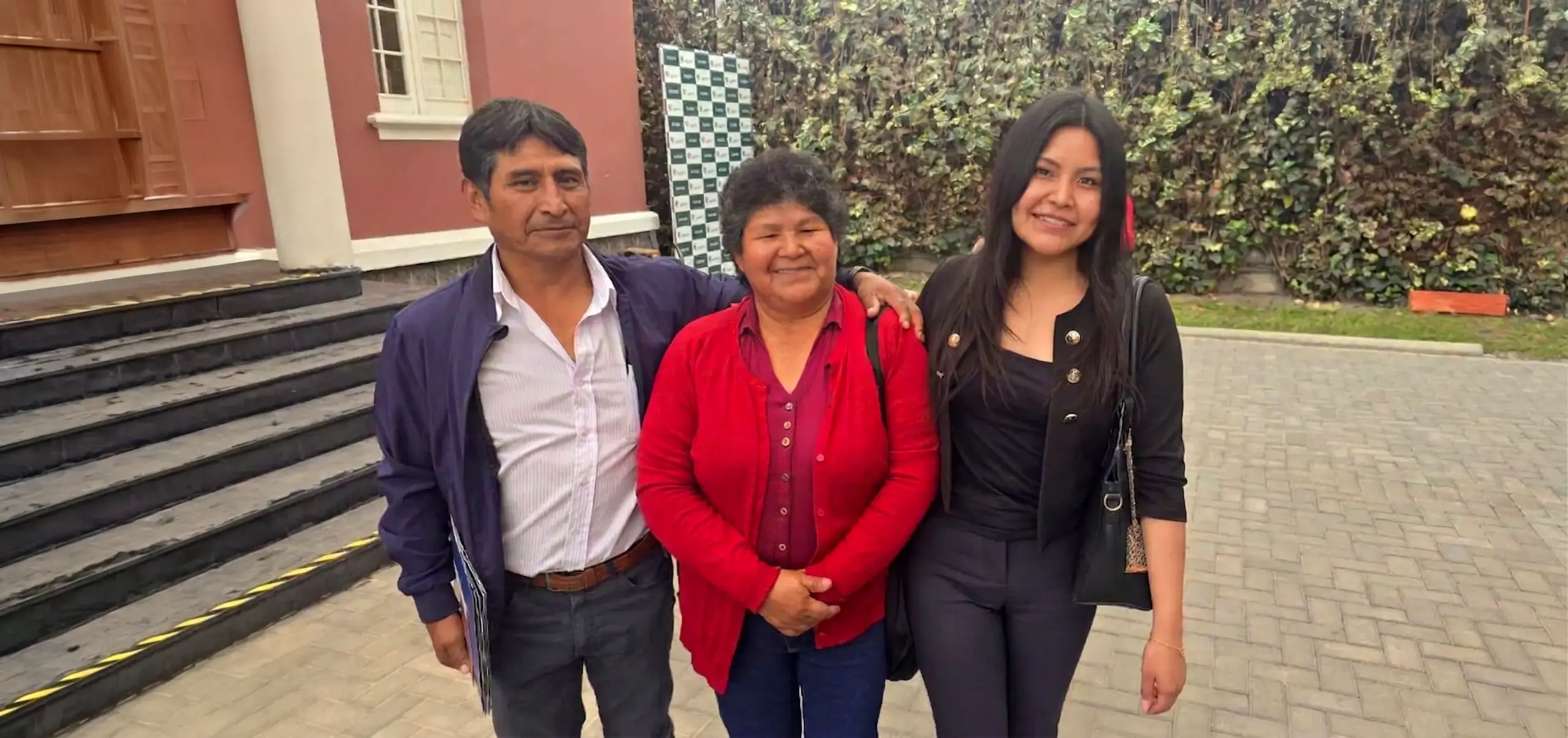

The case of Eco MT Group, a family business dedicated to recycling with more than 20 years of experience in Arequipa, highlights the gaps that prevent the potential of the recycling sector to generate employment, economic value and local development.
However, it also shows the structural barriers that limit the growth of many companies in the sector: lack of infrastructure, difficulties in accessing financing, limitations in working capital and barriers to accessing larger markets.
Based on the testimony collected by Libélula, we identified the main needs and the role of the actors that can contribute to unlocking these barriers.
Cristina Toledo and Leonardo Mamani have been recycling for more than twenty years. What started as a small family business has become, with effort and perseverance, their home's livelihood and the basis for building a future for their children.
- “I am in charge of the whole process, the purchases, the sales of recyclable material,” he says. Cristina while pointing to the space where they work every day.
Leonardo, her husband, complements the work.
- “I'm in charge of moving and picking up the material. We work together.”
Over the years, the business grew enough to allow something that many families dream of: that their children can study.
- “With this business I paid for my daughter's college,” says Cristina.
But today your company faces a problem that has nothing to do with effort or lack of experience.
It has to do with the system.
1. Machines that cannot work
Cristina The company has three machines that are idle.
“I have them paralyzed... it ties my hands. All I do is buy and resell and it's very slow my progress.”
The machines could process recycled plastic, add value to the material and sell it at better prices. But they cannot be used. The reason is simple: in the area where they were moved, there are no three-phase light, the electricity needed for industrial machinery.
Context: Infrastructure that enables production
Cristina has three machines ready to operate, but they are paralyzed. After moving due to a family emergency, she ended up in an area without access to three-phase power, which prevents her from using them. Although she could process plastic and generate more value, today she can only buy and resell, which slows her growth and significantly reduces her income.
Actors and roles
Recycler / family business. Seeks to use his machinery to process material and improve his income, but is constrained by external conditions.
Energy/utility company. Defines access to critical infrastructure (three-phase power) necessary to operate machinery.
Municipality / local government. Determines the conditions of land use and enables (or not) areas where this type of activity can be developed.
Machinery suppliers / technical support. They accompany the installation and adaptation of equipment to new operating conditions.
Support networks / social or productive programs. They can facilitate relocation processes, adaptation or access to minimum conditions to resume the activity.
Interrelation
The problem is not the lack of productive capacity, but the disconnection between basic conditions. In order for the machines to operate, access to energy, space and technical support must be aligned with the reality of the business. Without this coordination, an investment already made loses value and the business regresses instead of growing.
2. When business stops
Before the machines were rendered unusable, the company was busier.
“Previously, I used five people to help me select the material,” he recalls. Cristina.
Today the work is done mainly by her, her husband and her daughter. The business continues, but with an important limitation: they can only buy and sell recyclable material, without processing it. That means less income and less employment.
Context. Conditions to unlock growth
Before her machines were shut down, Cristina's business was more active and generated employment. Today, unable to process material, she can only buy and sell, which reduces her income and has forced her team to downsize to family work. The business continues to operate, but in a limited version that slows its growth.
Key players
Recycler / family business. Sustains the operation, but with less productive capacity and income generation.
Workers/classifiers. They depend on the volume of operation to access employment and income.
Buyers of recyclable materials Define prices and purchase conditions that directly impact the profitability of the business.
Intermediaries. They capture part of the value by concentrating volume and market access.
Associations / networks of waste pickers. They can help consolidate volume and improve negotiation conditions.
Interrelation
When the business loses processing capacity, it also loses margin, volume and employment. To reverse this situation, it is essential for recyclers to be able to access better sales conditions -either through partnerships that consolidate volume or more direct relationships with buyers- that will allow them to recover income and reactivate their operations.
3. The step towards formalization
For many years, the family avoided formalizing their business.
“We didn't want to be tied to bills or taxes. We thought more was going to be paid to the state than we were going to earn.”
But that perception changed when they participated in the program's training sessions. Jobs Greens Arequipa.
“We've been taught that there are benefits and ways to lower taxes,” explains Leonardo.
Formalization opens up new possibilities. For example, being able to sell directly to large companies that pay better prices for recycled material.
Context Formalization opens up opportunities
For years, the family avoided formalizing their business for fear of the costs and obligations. Formalization was perceived as a burden that could reduce their income. This perception changes when they have access to information and support that allows them to understand its benefits and how to manage it in a viable way.
Actors and roles
- Recycler / family business. Make the decision to formalize based on perceived costs and actual benefits.
- Training programs (Empleos Verdes Arequipa)). They provide information, support and tools to reduce entry barriers to formalization.
- State (SUNAT, municipalities, regulatory entities). They define the rules, obligations and benefits associated with formalization.
- Purchasing companies (industry). They generate concrete incentives by requiring formality to access better prices and trade relations.
Interrelation
Formalization occurs when three factors align: clear information that reduces initial fear, rules that are enforceable in practice, and a market that values formality. Without access to training and commercial incentives, the recycler tends to remain outside the system, even when formalizing could improve his or her income.
Thinking about growing
Evelyn, Cristina and Leonardo's young daughter, also participates in the family business and sees this work as an opportunity for personal and professional growth.
His role is to manage the financial and administrative side of the business.
“We are being trained in financial matters, to understand interest rates and evaluate which options are best for us.” Evelyn
For her, business management support is key. Many recycling companies have experience in day-to-day work, but they do not always have the tools to manage financing or plan for growth.
Context: Capabilities for growth
The business remains limited, but begins to incorporate new capabilities. With Evelyn's participation and the training received, the family begins to better manage its finances and evaluate growth options. This process opens up opportunities, especially for young people taking on management roles, although the conditions for scaling up are not yet in place.
Key players
- Recycler / family business. It seeks to better organize itself and make decisions to sustain and project its growth.
- Young people in the business (like Evelyn). They take on financial and administrative functions, strengthening management and opening up new opportunities.
- Training programs. Develop business capabilities and reduce gaps in decision making.
- Financial entities. They offer options that require technical understanding to take advantage of.
Interrelation
Growth is enabled when the operation is connected to management. The incorporation of young people and access to training enable the understanding and use of financial tools, reducing uncertainty and bringing the business closer to real opportunities for expansion.
What the business needs to take off
Cristina explains it in a straightforward manner.
“What we need is a big piece of land... and three-phase electricity so we can produce more.”
Under these conditions, the company could reactivate its machines and return to processing recycled plastic. That would allow them to sell material to companies in Lima, where prices are more competitive. It would also mean something more important.
More employment.
“We could deploy more staff and generate more profit.”, says Cristina.
Context: Conditions for scaling up recycling
Cristina sums it up clearly: to grow, the business needs basic conditions that it does not have today. Adequate space and access to three-phase power would make it possible to reactivate its machines, process material and access better markets. Without these conditions, the business remains limited and fails to scale. When infrastructure, financing and market access are in place, recycling can generate more employment and economic value.
Key players
- Recycler / family business. It has experience, machinery and potential demand, but depends on external conditions to grow.
- Municipality / local government .Define access to suitable land and provide space where the business can operate and expand.
- Energy / utility company. Provides the critical infrastructure (three-phase power) necessary for production.
- Purchasing companies. Generate demand with better prices, conditioned to volume, quality and processing capacity.
- Support / articulation programs. They can facilitate access to enabling conditions and connect the business to market opportunities.
- Financial entities. They can enable access to infrastructure and expansion, as long as there are minimum operating and predictability conditions.
Interrelation
Business takes off when basic conditions and access to resources are aligned. Adequate space and energy allow production; production generates volume and stability; and on that basis, financing becomes viable for scaling up. This coordination not only improves income, but also generates employment and consolidates business growth.
A business with the potential to grow and generate impact
Eco MT Group's story shows that recycling is not just an environmental activity. It is an economic activity that can generate income, employment and opportunities for many families.
When recyclers have the right conditions, they can strengthen their business and add value to the entire recycling chain. Because behind every kilo of recycled material there is more than just waste. There are people working to build a better future.

← Previous
Next →

Stay up to date
Receive a summary of relevant news about companies and sustainability. All the months. Free!
