2017: International Year of Sustainable Tourism
 hace 9 year
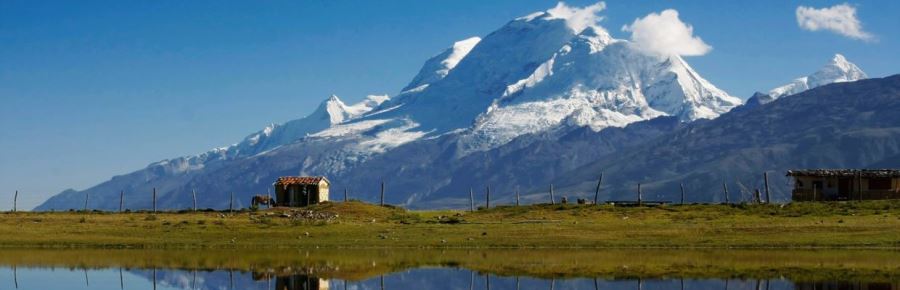
In May of last year, the study “World Heritage and Tourism in a Changing Climate” revealed that climate change is putting 31 cultural and natural sites in 29 countries at risk. Huascarán National Park in Peru, the Atlantic Forest - Southeast Reserves in Brazil, and Rapa Nui National Park in Chile are among the vulnerable sites in Latin America.
On the other hand, the report “Climate Change and Tourism”, by the United Nations Environment Program (UNEP) and the World Tourism Organization (UNWTO), projects that, in the event that greenhouse gas emissions continue as they are today, CO₂ emissions generated by the tourism sector on a global scale could have grown by 152% by 2035. The UNWTO also states that tourism contributes more than 10% of the world's Gross Domestic Product (GDP) and generates approximately 115 million direct jobs.
With the intention of promoting socially and environmentally responsible tourism, the United Nations General Assembly has approved the designation of 2017 as the International Year of Sustainable Tourism for Development, which recognizes “the importance of international tourism and, in particular, of the designation of an international year of sustainable tourism for development, to promote better understanding among peoples everywhere, to lead to greater awareness of the rich heritage of diverse civilizations and to lead to a better appreciation of the inherent values of diverse cultures, thus contributing to the strengthening of peace in the world».».
Taleb Rifai, UNWTO Secretary General has indicated that “the proclamation by the United Nations of 2017 as the International Year of Sustainable Tourism for Development is a unique opportunity to expand the contribution of the tourism sector to the three pillars of sustainability (economic, social and environmental), as well as to raise awareness of the true dimensions of a sector that is often undervalued.”.
Responsible Tourism
An example of sustainable and responsible tourism is being implemented in Barbados. Donna King Brathwaite, Environmental Education Officer at the island's Ministry of the Environment, explained to ConexiónCOP that the phenomena in the Caribbean island - traditionally touristic - have intensified because the sea temperature is warming and there are more storms. “If before they were grade 1, now they are grade 3 and more frequent,” he said.
Although tourism in Barbados has not been affected by climate change, the government is working to make it sustainable and adapt to the new tourism scenarios. “Tourism corridors have been created that have a dual function: to contain the sea, and in parallel, to promote recreation; in addition, the use of solar systems to generate energy is promoted, there is more training in management and risk associated with disasters, which is a line of work that Barbados has promoted in terms of training. We are also working on water resource management and flood prevention,” said King Brathwaite.
You can also read:
- How does climate change affect climate scenarios?
- Ten paradisiacal places at risk of disappearing due to climate change
- Mexico seeks to recover tourist destinations damaged by climate change

← Previous
Next →